Symbiosis of Engineering Judgment & Calculations
Technical Analysis Combined with Engineering Judgment
Structural engineering relies on more than calculations alone. Miller Consulting Engineers combines technical analysis with engineering judgment developed through experience to evaluate structural systems, identify potential deficiencies, and develop safe, efficient design solutions. This article explores how calculations and professional judgment work together to guide sound engineering decisions, from design and technical reviews to field assessments.
Calculations
I can’t count how many times I’ve heard, “Oh, you must be good at math.” after telling someone I’m a structural engineer. Well, we are, but that’s only half the equation. Engineering calculations are important, but as you progress through your career, engineering judgment becomes paramount for efficiency.
CALCULATIONS
Engineering calculations are essential in the industry but are typically only looked at by the structural engineer and the jurisdiction as they review the structural design for technical correctness. The calculations prove to the jurisdiction (the municipality responsible for approving the plans) that all aspects of the project are structurally sound.
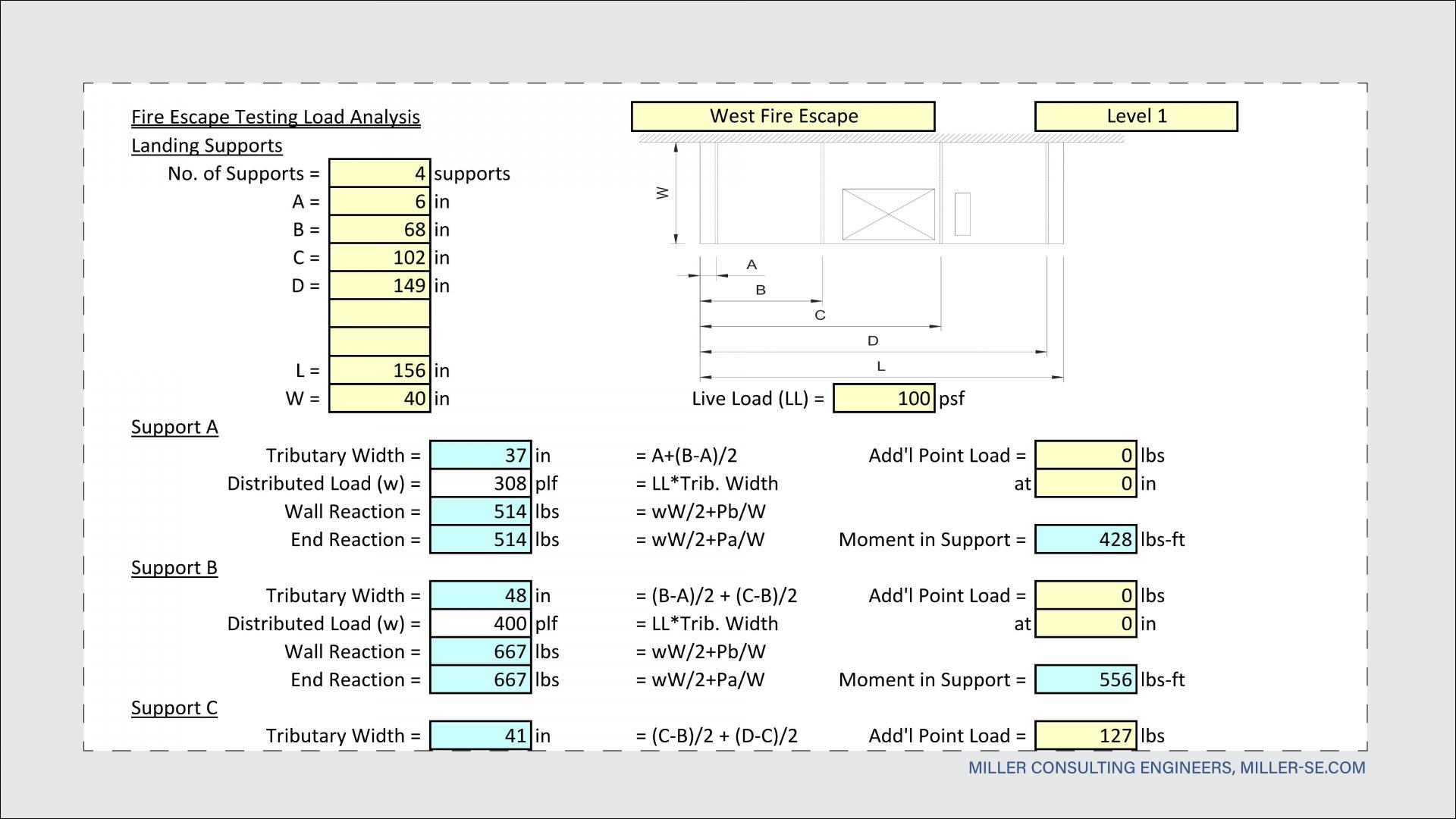
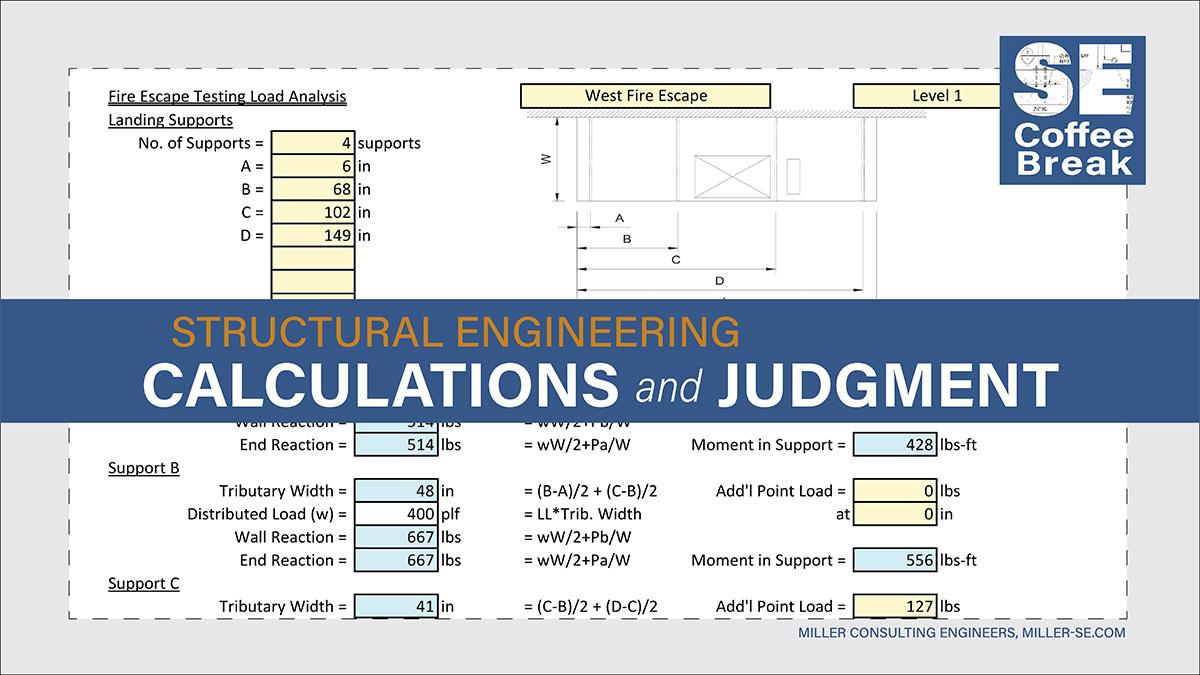
Engineering calculations come in many forms. They can be handwritten computations or typed equations. The calculation set tells a story how the various loads in a structure are resisted and supported down to its base.
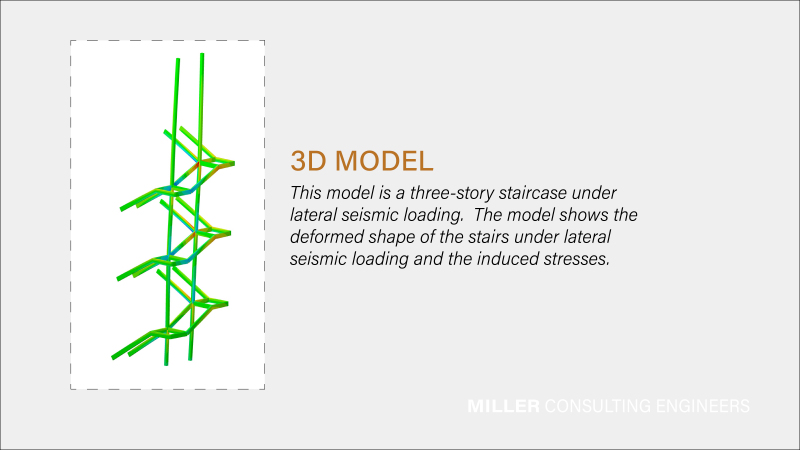
As the old adage goes, a picture is worth a thousand words. Engineers often include technical diagrams in their calculations to help tell the story. If a picture is worth a thousand words, what is a three-dimensional model worth? I find calculation packages based on three-dimensional analysis models to be some of the most rewarding to assemble because they combine engineering calculations with clear visual representations of load paths, deformations, and stresses. These images often communicate the behavior of a structure far more effectively than pages of equations alone.
The story told by a calculation set is rarely written in a single draft. Structural design is an iterative process and calculations evolve alongside the project. Early in your career, you may find yourself analyzing the same structural element multiple times as the design is refined. For example, a roof beam may begin as a 6×10 member, then be reduced to a 4×10 after evaluating alternate load combinations. Later, the client may request a glulam beam, requiring another round of calculations. By the time the engineering drawings are stamped, the final calculations reflect not only the completed design but also the engineering decisions that shaped it.
Judgment
Engineering judgment is the application of knowledge gained from creating calculations of multiple systems, members, and connections over the years. At the beginning of your career, you spend most of your working hours creating calculations that are reviewed by the stamping engineer. Over the years before you become licensed, you develop engineering judgment through the numerous calculations you create. Soon, you can accurately assume elements in a structural design that don’t require iterative calculations. This increases your engineering efficiency and reduces calculation time.
Engineering judgment is the ability to look at a structural system and see areas of deficiency or strength. This becomes useful when reviewing new engineer’s calculations and field observations. The knowledge and judgment you’ve gathered can now be applied to reviewing others’ calculations. Before digging into a technical review, I peruse the drawings. I’m looking for undersized members based on experience. The same judgment is utilized in the field when performing an on-site condition assessment.
The most difficult assessments are when a client feels something is wrong but no structural issues are visibly present. These situations test your ability to think about multiple factors and structural systemic responses. Regardless of your knowledge, judgment, and confidence, you can always ask for help from coworkers. Good engineering judgment also means recognizing when another perspective can make the solution stronger. You hold the public’s safety in your hands.
Engineering calculations provide the proof, while engineering judgment guides the process. Together, they make structural engineering both safe and efficient.
Topics
Photos
Structural Engineering Calculations